Understanding the Flare Network

Flare’s native interoperability protocols secured by the network itself.

State Connector

Allows information from other blockchains and the internet to be used securely, scalably, and trustlessly within smart contracts.

FTSO

Provides highly decentralized price and data feeds to dapps on Flare without reliance on centralized providers.

Decentralized Data

Enables the reliable and decentralized delivery of data from a wide variety of off-chain sources.

What is the Flare (FLR) token used for?

FLR is the native token used for payments, transaction fees to prevent spam attacks and staking in validator nodes. FLR can also be wrapped into an ERC-20 variant, WFLR. WFLR tokens serve various functions; they can be delegated to FTSO data providers, for example, or staked to participate in governance.

These two uses are not mutually exclusive and do not prevent the tokens from being used in other EVM-compatible dapps and smart contracts on Flare.

Wrapped FLR (WFLR) can be minted by depositing native FLR tokens into a smart contract and withdrawing the newly minted tokens.

Claim FLR
FLR Token
FlareDrops

Hold wrapped FLR to earn monthly rewards.

Actively participate in securing and growing Flare while simultaneously earning rewards. Compound your rewards by delegating or staking FLR.

FlareDrops

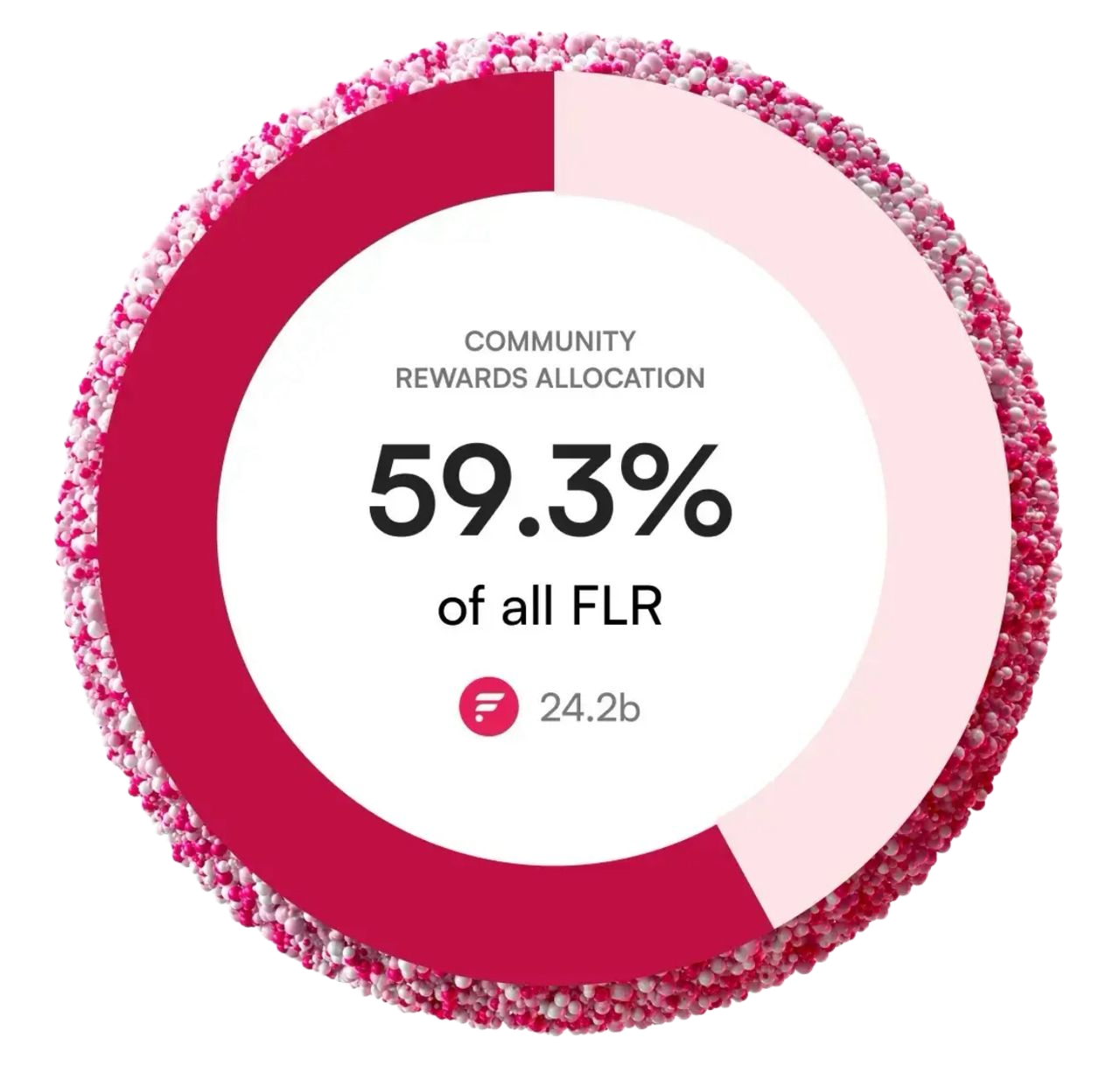
36 monthly FlareDrops totaling 24.2 billion FLR can be claimed by community members who have wrapped their FLR or staked to a Flare validator.

Every 30 days, approximately 670 million FLR are divided among network participants based on their combined wrapped FLR (WFLR) and staked FLR. FlareDrops need to be claimed within 67 days, after which any remaining FLR is burnt.

Stake Flare
Claimed Flare
Wallet Σ(Tx) Burned Hash Status Time